
A vehicle’s transmission plays a pivotal role in delivering smooth acceleration, efficient power transfer and dependable driving performance. However, mechanical wear, overheating and internal component failures can affect its operation over time. Identifying the right solution requires more than recognising the symptoms.
Understanding how specialists choose between a targeted repair, a full rebuild or a replacement unit helps vehicle owners make informed decisions and avoid unnecessary expenses. An experienced automatic transmission specialist in Brisbane assesses the extent of damage, repair costs and long-term reliability before recommending the most suitable approach.
Repair, Rebuild or Replace: A Quick Overview
Although all three services address transmission problems, they involve different levels of mechanical work. For a detailed side-by-side comparison of the two larger jobs, read our guide to transmission rebuild vs replacement.
Transmission Repair
Transmission repair focuses on fixing specific faulty components without completely dismantling the gearbox. Common repairs include:
- Replacing damaged seals and gaskets.
- Repairing faulty solenoids or valve bodies.
- Addressing transmission fluid leaks.
- Replacing defective sensors or electrical components.
- Resolving certain gear-shifting problems.
Transmission Rebuild
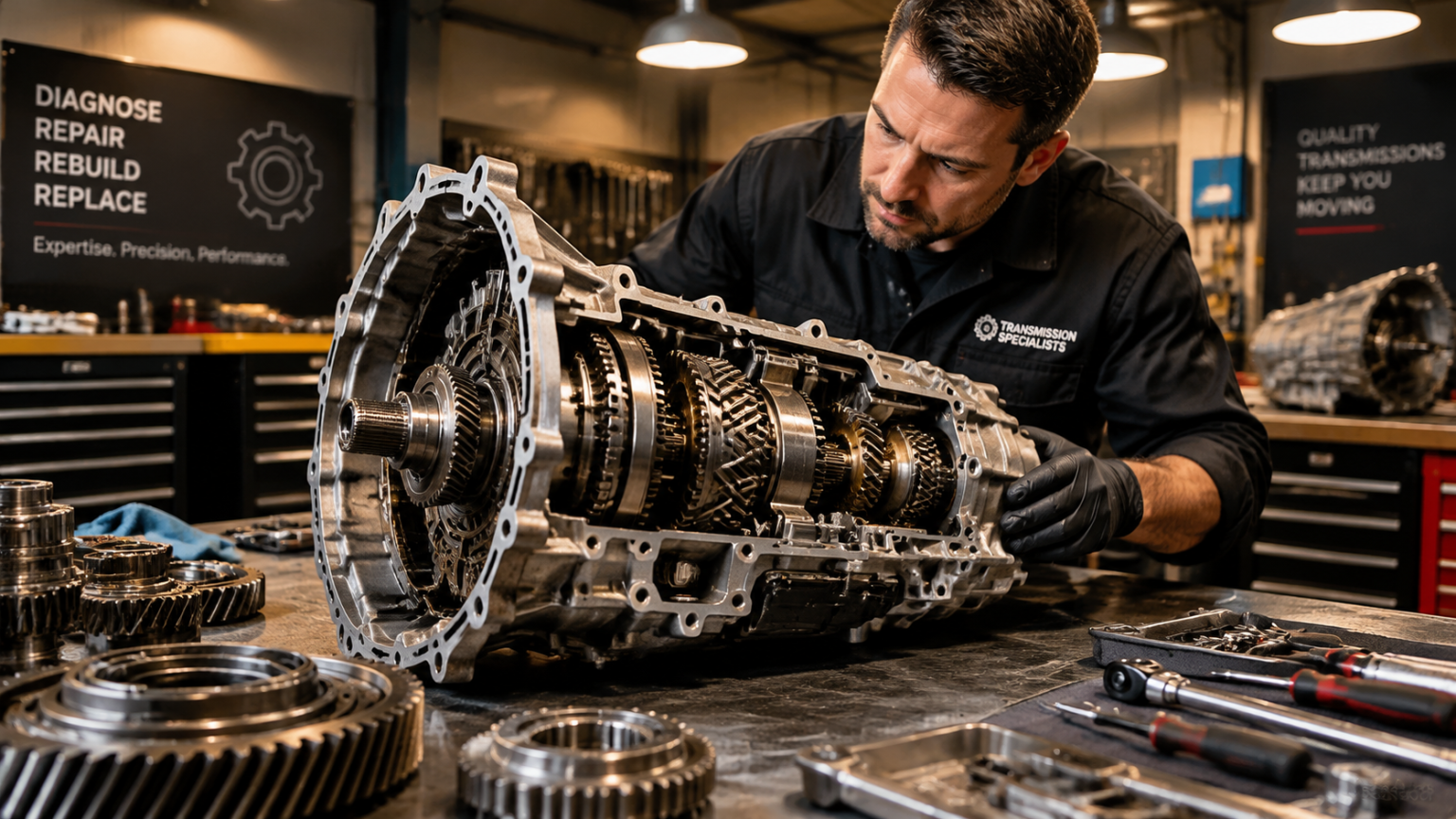
A transmission rebuild involves dismantling the gearbox, inspecting its internal components and replacing worn or damaged parts. Specialists typically inspect clutch packs, bearings, seals, gears and hydraulic components before reassembling and testing the transmission.
Transmission Replacement
Transmission replacement involves removing the existing gearbox and installing a new, remanufactured or reconditioned unit. It is often the faster option for older vehicles or transmissions that are difficult to source parts for.
How Do Specialists Diagnose Gearbox Problems?
A recommendation is only as reliable as the diagnosis behind it. A systematic inspection generally includes:
- Initial assessment: Discussing symptoms, driving behaviour and maintenance history.
- Electronic diagnostics: Scanning the transmission control system for stored fault codes and live data, much like a professional engine diagnostics
- Fluid inspection: Checking fluid condition, contamination and possible leaks.
- Valve body testing: Testing the valve body on a hydra-test machine that replicates real road conditions, so faults can be confirmed before the gearbox is pulled apart.
- Mechanical testing: Evaluating hydraulic pressure, shifting behaviour and component operation where appropriate.
- Repair recommendation: Comparing practical solutions based on confirmed findings.
If a transmission or dashboard warning light comes on, avoid clearing the fault codes before your appointment, as they help pinpoint the problem.
What Factors Help Specialists Choose the Right Option?
Once the fault is confirmed, professional transmission specialists weigh several factors before recommending a repair, rebuild or replacement.
Severity of Damage
Minor electrical faults may require straightforward repairs. However, extensive clutch damage, contaminated fluid or damaged internal gears can indicate more serious problems.
Overall Transmission Condition
Specialists assess the gearbox’s mechanical condition, service history and previous repairs. A transmission with widespread internal damage may require rebuilding or replacement, even when its external housing appears undamaged.
Repair Costs vs Long-Term Value
The cheapest initial quote does not always provide the best long-term value. Specialists consider:
- Replacement parts and labour expenses.
- Availability of compatible transmission units.
- Expected reliability after repairs.
- Warranty coverage and conditions.
- Vehicle age, mileage and market value.
If resale value is part of your decision, our article on the used vehicle market explains what drives demand. For more ways to keep costs down, see our tips to save money on car repairs without compromising safety.
Vehicle Usage
A family vehicle used for occasional commuting has different demands from a ute regularly towing heavy loads. Transmission specialists consider driving conditions, operating temperatures and expected workloads when recommending suitable solutions. If the engine is also showing significant wear, it can be practical to plan an engine rebuild at the same time.
Can Regular Maintenance Prevent Major Transmission Repairs?
Preventive maintenance cannot eliminate mechanical wear, but it can reduce the risk of avoidable transmission damage. Vehicle owners should:
- Follow manufacturer-recommended transmission servicing intervals.
- Use the correct transmission fluid specification.
- Investigate leaks and unusual shifting promptly.
- Avoid exceeding recommended towing capacities.
- Address overheating before internal damage develops.
Maintaining appropriate fluid levels and operating temperatures helps protect transmission components. A regular automatic transmission tune-up is one of the simplest ways to extend gearbox life.
When Should You Book a Transmission Inspection?
Transmission problems rarely become less serious through continued driving. Book an inspection if you notice slipping gears, delayed engagement when selecting Drive or Reverse, whining or clunking noises, overheating, fluid leaks or harsh gear changes. Our guide to the warning signs of transmission problems explains each symptom in more detail.
These symptoms do not automatically mean a complete rebuild is necessary. Accurate diagnosis is essential before deciding on major repairs.
Frequently Asked Questions
Is it cheaper to repair or rebuild a transmission?
A targeted repair is usually cheaper when the fault is isolated, such as a solenoid, seal or sensor. A rebuild costs more but addresses widespread internal wear. A proper diagnosis is the only reliable way to know which applies to your vehicle.
How long does a transmission rebuild take?
Most transmission rebuilds are completed within 3 to 5 days, depending on parts availability.
Do you work on CVT and dual-clutch transmissions?
Yes. We service conventional automatics, CVTs, dual-clutch (DSG/DCT) transmissions, and 4WD and AWD transmissions.
Is transmission work covered by a warranty?
Acacia Automatics offers a warranty on transmission rebuilds and repairs. Ask our team about the terms that apply to your job, or visit our FAQs for more answers.
Trust Acacia Automatics for Expert Transmission Solutions
At Acacia Automatics, we understand how frustrating gearbox problems can be, which is why we focus on accurate diagnostics, professional workmanship and practical solutions tailored to your vehicle’s condition.
As a family-owned business established in 1974, we offer automatic transmission servicing, repairs, rebuilding and replacement from our workshop in Moorooka, Brisbane. Our experience with conventional automatics, CVTs and dual-clutch transmissions allows us to investigate complex gearbox problems and recommend appropriate repairs. We also provide a full range of mechanical services, from engine diagnostics to brakes and air conditioning.
Whether you need a transmission diagnosis or professional assistance with unusual gear changes, we aim to help you make an informed decision without unnecessary repairs. Call 07 3277 5207 or contact us to book a transmission inspection and let our specialists restore your vehicle’s performance and reliability.