
At Acacia Automatics we look over to the signs Your Brakes Need Immediate Attention Your braking system rarely fails without warning. In most cases, your vehicle will display noticeable signs when something is not right. Acting early can prevent further damage and, more importantly, keep you safe on the road.

Car Brake Repair and Brake Pad Replacement
Common warning signs include:
- Grinding or squealing sounds when braking
- Vibrations or pulsations through the brake pedal
- A soft or spongy pedal feel
- Increased stopping distance
- Vehicle pulling to one side when braking
- Brake warning light illuminated on the dashboard
These symptoms may point to worn brake pads, damaged discs, or issues within the hydraulic system. Addressing them promptly helps maintain reliable braking performance and avoids costly repairs later.
Our Brake Services
We offer a full range of brake repair and service options for vehicles in Acacia Ridge. Our aim is to make sure your brakes work well in all driving conditions.
Our brake services include the following:
-
Brake Pad Replacement
Brake pads naturally wear down over time. We replace worn pads with high-quality parts to restore safe, reliable braking.
-
Brake Rotor (Disc) Resurfacing & Replacement
Damaged or uneven rotors can cause vibrations and reduce the effectiveness of your brakes. We check, resurface, or replace rotors as needed to keep your brakes working smoothly.
-
Brake Hydraulics, ABS & Electronics
Modern brakes use hydraulic pressure and electronic components such as ABS and sensors. We find and fix any faults that affect how your brakes work.
-
Brake System Safety Checks
We perform thorough brake checks to inspect the pads, discs, fluid, and other components. This helps us spot problems before they get serious.
How Do We Diagnose Brake Problems?
We use a clear process to quickly find any problems in your brake system.
Our brake diagnostics include the following:
-
Brake fluid inspection and pressure testing
-
Checking for leaks or worn hydraulic components
-
ABS scanning to detect electronic faults
-
Inspection of brake pads, discs, and callipers
-
Testing overall braking performance
This approach allows us to identify both mechanical and electronic issues, ensuring your braking system is functioning correctly.
Why Choose Acacia Automatics for Brake Repair and Transmission Checks?
We focus on delivering reliable brake repair services, emphasising safety and quality workmanship. Every vehicle is carefully assessed to ensure the correct repair solution is applied.
Drivers in Acacia Ridge choose us because we offer the following:
-
Attention to detail in every inspection and repair
-
Clear communication about issues and recommended work
-
Practical solutions tailored to your vehicle
-
A strong focus on safety and performance
Our goal is to give you peace of mind when you drive.
Keeping your brakes in top condition is essential for your safety and your vehicle’s performance. Book your brake inspection with us today and let our experienced team ensure your car stops smoothly, safely, and reliably every time you drive.
Frequently Asked Questions
Is it dangerous to keep driving if my brakes are grinding or squealing?
Grinding is a sign the brake pad material has worn through, meaning metal is now contacting metal on every stop. It's not safe to keep driving — stopping distance increases and the ongoing contact damages the rotor further with every trip. If you hear grinding, it's best to stop driving as soon as it's safe to and get the vehicle looked at straight away.
How do I know if my brake pads or my rotors are the actual problem?
Squealing or grinding noises usually point to worn pads, while vibration or pulsing through the pedal when braking is more often a sign of warped or uneven rotors. The two issues can also overlap, since badly worn pads can damage the rotors underneath them. A proper inspection checking both the pad thickness and rotor condition is the only way to know for certain which is causing your symptoms.
Why does my brake pedal feel soft or go closer to the floor than usual?
A soft or spongy pedal is a hydraulic issue, not a pad problem — it usually means air has entered the brake lines, brake fluid is low, or there's a leak somewhere in the system. This is different from worn pads, which cause a firm pedal with noise, not a sinking one. A soft pedal should be treated as urgent, since your stopping power can be unpredictable until it's fixed.
Can worn brake pads damage other parts of the car if I keep driving on them?
Yes. Once brake pads wear down completely, the metal backing plate starts contacting the rotor directly, scoring and damaging its surface. What could have been a straightforward pad replacement can turn into a rotor replacement, and in some cases affects the calipers too. Acting on worn pads early is almost always cheaper than waiting until they fail completely.
How long does a brake pad or rotor replacement usually take?
A straightforward brake pad replacement can typically be done within a couple of hours. If rotors also need resurfacing or replacing, or if there are hydraulic or ABS issues involved, it may take longer. We'll give you a clear time estimate once we've inspected your brakes and know exactly what's needed.
Can you fix my brakes the same day, or do I need to book in advance?
We offer same-day brake replacements where possible, particularly for straightforward pad or rotor jobs. If your brakes are showing warning signs and you need to be seen urgently, get in touch and let us know — we'll do our best to fit you in as quickly as we can.
Why is my car pulling to one side when I brake?
This is often caused by uneven brake pad wear, a sticking caliper on one side, or a hydraulic imbalance between the wheels. It can also point to a rotor issue on one side of the vehicle. Because pulling affects how predictably your car stops, it's worth having it checked rather than adjusting your driving to compensate for it.
Do I need new rotors every time I replace my brake pads?
Not necessarily. If your rotors are still within a safe thickness and free of deep grooves, cracks, or warping, they can often be resurfaced or reused alongside new pads. Rotors only need replacing once they're worn below the safe minimum thickness or too damaged to machine smooth. We measure and check your rotors as part of every pad replacement so you're only paying for what's actually needed.
What does a brake warning light on my dashboard actually mean?
A brake warning light typically means the system has detected low brake fluid, worn pads, or a fault somewhere in the hydraulic or electronic components. It's a signal from the car's computer that something in the braking system isn't operating as it should, so it shouldn't be ignored even if the car still feels like it's stopping normally.
Can a brake problem also affect my ABS system, or are they separate issues?
They can be connected. ABS relies on the same hydraulic system and sensors used for normal braking, so a fault like low fluid, a failing sensor, or a hydraulic issue can trigger both a standard brake warning and an ABS fault at the same time. As part of our brake diagnostics, we scan for ABS-specific faults alongside the mechanical inspection so nothing gets missed.
How often should brake pads actually be replaced for normal driving?
There's no fixed distance that applies to every car, since it depends heavily on your driving style and conditions — frequent city stop-start driving wears pads faster than highway driving. As a general guide, many pads last somewhere between 30,000 and 70,000 kilometres, but the only reliable way to know is to have them checked at each service, since we measure pad thickness directly rather than relying on an estimate.
Will my braking feel different after new pads or rotors are fitted?
Yes, and that's normal. New pads and rotors need a short bedding-in period, usually the first 200 to 300 kilometres of driving, during which braking may feel slightly firmer or grippier than you're used to. If your brakes feel noticeably wrong, such as pulling, grinding, or a soft pedal, rather than just different, get in touch so we can take a look.
What's included in a brake safety inspection, and is it different from a full repair?
A safety inspection is a check, not a repair — we inspect the pads, discs, brake fluid, and hydraulic components, and run an overall performance test to see how your brakes are actually performing. If we find a problem during the inspection, we'll explain exactly what it is and what repair options you have, rather than proceeding with any work you haven't agreed to.
Can brake problems affect how well my car passes a roadworthy or safety inspection?
Yes, brakes are one of the most heavily checked items in any roadworthy or safety inspection, and issues like worn pads, warped rotors, or a hydraulic fault can result in a fail. Getting your brakes checked and repaired before a roadworthy inspection can help you avoid a failed certificate and a second trip back.
Do you use genuine or aftermarket brake parts?
We fit high-quality parts suited to your vehicle and driving needs, and we're happy to talk through your options if you have a preference between genuine and quality aftermarket parts. What matters most is that whatever we fit meets the correct specifications for your car, so your braking performance and safety aren't compromised either way.
Similar Services
This ensures you will receive the most Affordable and Honest Service on the Brisbane Market Today.
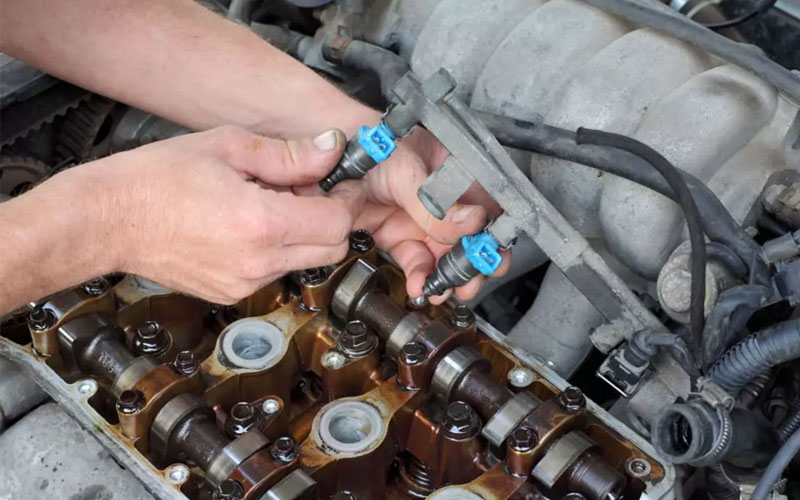
Fuel injectors get damaged and blocked with metal swarf as well as other fuel contaminants, build-up and residue that drivers can both feel behind the wheel and in their wallet. It is quite a common issue that decreases your vehicle’s power delivery and responsiveness.

Acacia Automatics is your QLD based mechanic, providing excellence in our automotive services. We specialise in Volkswagen, Audi, Porsche, Skoda and other brands’ makes and models. We provide a wide range of performance parts for vehicles to increase its engine power and all types of servicing at a competitively low price.